
Recent Timeline
The following timeline covers the 20th century to today, tracing events affecting the status of homosexuality and the development of the LGBTQ communityHarvey Milk - Source: provided by author- Daniel Nicoletta Date: 1978
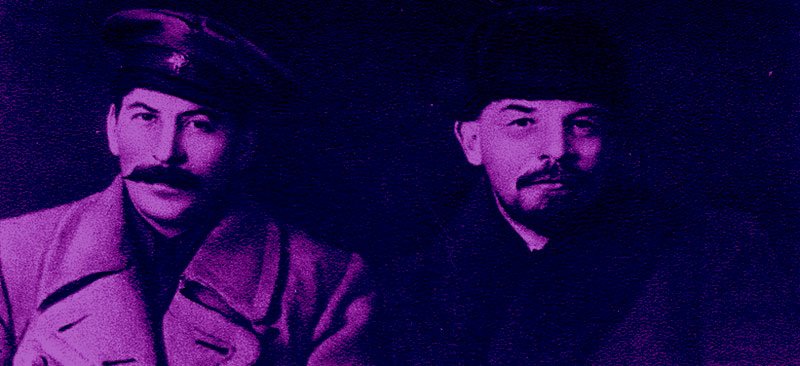
Communism and Gays 1917-1934
Many may find it difficult to believe that the advent of communism and the Russian Revolition provided a level of acceptance for homosexuals- albeit temporarily. With it’s desire to eradicate anything that defined the previous social order of the Czars the Russian revolution removed all mentions of sexual practices from the Criminal Code established in 1922. This opened the way for a higher acceptance of prostitution, abortion and yes- homosexuality. However these new freedoms were short lived. When Stalin came to power The Stalinist government banned abortion, made divorce more difficult and re-criminalized homosexuality. Gay men faced up to eight years in prison. Homosexuals were driven back into the closet and suicides rose significantly. In 1934 there were mass arrests of homosexuals in Moscow and other cities. photo attribution: Vladimir_Lenin_and_Joseph_Stalin 1919 public domain (see page for author)
PRIMARY REFERENCE
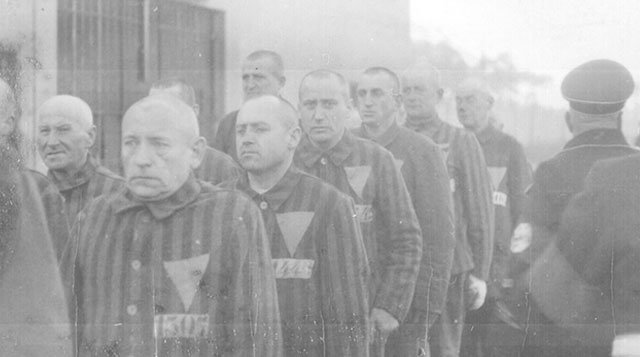
The Nazis and Gays 1932-1945
Although the German criminal code had an element referred to as “paragraph 175” since it’s inception in 1871 it was the Third Reich which took enforcement of the code to new, degrading heights. In 1935 the code was reformed to include “A man who engages as the active or passive partner in lewdness with another man is to be punished by imprisonment.” This resulted in the eventual inclusion of thousands of known homosexuals being imprisoned in concetration camps. It was during this time that the pink triangle came into use to help identify those types of prisoners. Towards the end of the war, with the plight of the Nazis becoming desperate for manpower, many homosexuals were released into the Waffen SS 36th Grenadier Division. This Division itself consisted of many sexual deviates and were resposnsible for some of the worst human atrocities of the war. However, towards the end of the war this “elite” band was so decimated that inclusion in it’s ranks became an almost certain death sentence. photo attribution: http://www.glenvigus.com/wordpress/faith/my-freedom/
PRIMARY REFERENCE

Ground Breaking Transexual 1950
Although many may debate the relevancy of this woman in this timeline Christine Jorgensen obviously added a heigtened sense of awareness to the personal plights of many within the LGBTQ community. Born George Jorgensen in 1926, he enlisted in the army during WWII. Being somewhat of a recluse George was never happy with his sexual identity and during a European tour became aware of Danish Dr. Christian Hamburger, who was experimenting in gene therapy and George soon initiated communication with him. In 1950, he traveled to Denmark, where he underwent a long consultation period after which the doctor found him a candidate for sexual re-assignment. This was inititated by first undergoing hormone therapy and then to start dressing as a woman. As the hormone treatment took full effect the final phase of the re-assignment was a series of surgical prcedures to change the genitals from a man to a woman. All in all the transformation was deemed succesful and the new “Chrsitine” was happy with the outcome. After her return to the U.S. she did a number of media interviews after her return to the US. as well as many speaking engagements. She was fairly well accepted within many social circles and was even picked up by Hollywood for a bigraphical movie of her experience. She died in 1989, at the age of 62. Primary reference: http://www.bbc.com/news/magazine-20544095
PRIMARY REFERENCE
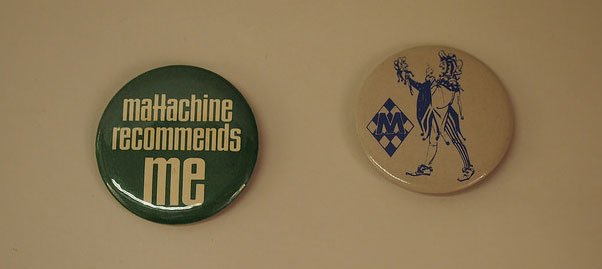
The Mattachine Society and One Magazine 1952
The idea for an organization dedicated to homosexuals emerged from a Mattachine Society discussion meeting held on October 15, 1952. ONE Inc.’s Articles of Incorporation were signed by Antonio “Tony” Reyes, Martin Block, and Dale Jennings on November 15, 1952. Other founders were Merton Bird, W. Dorr Legg, Don Slater, and Chuck Rowland. Jennings and Rowland were also Mattachine Society founders. The name was derived from an aphorism of Victorian writer Thomas Carlyle: “A mystic bond of brotherhood makes all men one”. The name was also a nod to referring to a gay person as “one of us”. ONE was the first LGBT organization in the United States to have its own office, as such its offices acted as a prototype LGBT community center
One, Inc. readily admitted women, including–with their pseudonyms–Joan Corbin (as Eve Elloree), Irma Wolf (as Ann Carrl Reid), Stella Rush (as Sten Russell), Helen Sandoz (as Helen Sanders), and Betty Perdue (as Geraldine Jackson). They were vital to its early success. ONE and Mattachine in turn provided vital help to Dorothy Louise Taliaferro Martin and Phyllis Ann Lyon to form the Daughters of Bilitis in 1955 and launch their newsletter The Ladder in 1956. The Daughters of Bilitis was the counterpart lesbian organization to the Mattachine Society, and the organizations worked together on some campaigns and ran lecture series. Bilitis came under attack in the early 1970s for “siding” with Mattachine and ONE, rather than with the new separatist feminists. Photo attribution: National Museum of American History
PRIMARY REFERENCE
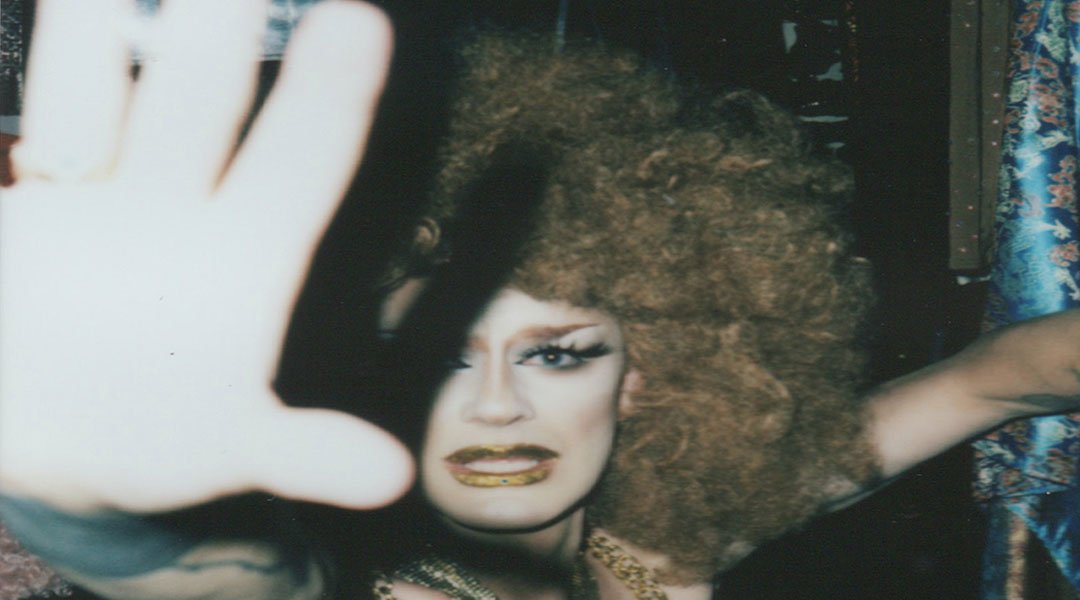
Compton Cafertria Riot 1966
Almost lost in history but sometimes referred to as a dress rehearsal for Stonewall the Compton Cafertia Riot illustrated the growing disgust with police and their ations. Three years before Stonewall, the crowd who hung out at Compton’s in the Tenderloin Distric in San Francisco —drag queens, transgender women, gay hustlers—finally got sick of the constant harassment and the way the cops would throw them in jail for any reason: wearing lipstick or mascara, or even a blouse that buttoned on the “wrong” side. The patrons, mostly drag queens and transgender folk, decided to fight back against the police when a drag queen threw coffee on a police officer attemting to arrest her. More police were called to the scene and all hell broke loose ast the fighting turned into a riot spil,ling out into the street.
It’s hard to imagine an inner-city battle between citizens and police — not to mention the novelty of a confrontation between cops and gender-nonconforming people — getting ignored by the media. But a half-century ago, no San Francisco publication would touch the Compton’s Cafeteria riot; that’s why it’s unclear what day it actually occurred (a commemorative panel from 10 years ago simply gives the date as August 1966).
PRIMARY REFERENCE
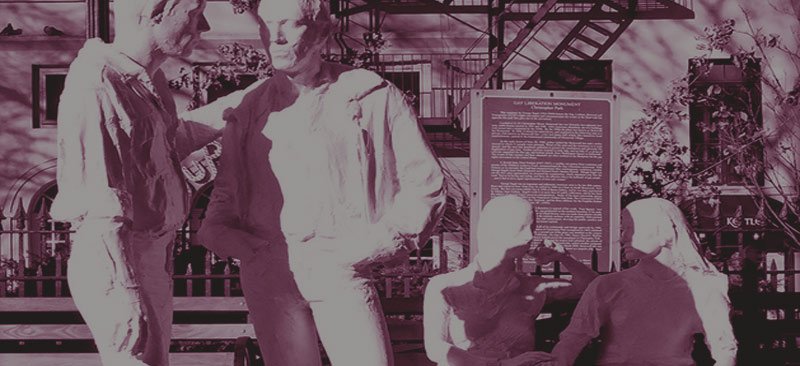
Stonewall Riots 1969
On a sultry evening on Friday, June 27, 1969, a feeling of “we damn well won’t take it anymore” overtook the patrons at a popular Greenwich Village, New York gay bar. The target of regular harassment by police, the Stonewall Inn was apparently ripe for an overflow of anger when the police attempted the third raid within a week. As some patrons were grabbed by police others decided to fight back. The incident soon spilled into the street and other gays in the neighborhood joined in the ensuing melee. Estimates of the angry gay crowd were estimated at close to 500. Armed with only billie clubs the police were overwhelmed by Gays throwing bottles trash cans and anything else they could get their hands on. A parking meter was ripped out of the street and the gays then barricaded many of the cops inside the bar. Drag queens acted almost as a tactical force and overwhelmed many police and began pummeling them with fists and high heels. Although the crowd dispersed by the early morning hours an even larger group returned the following night and totaled almost 2000 gay men and women. Fighting with police again resumed and a police unit had to be called in to quell the riot. All totaled approximately 15 were arrested but 4 police were hurt. The following Wednesday over 1000 individuals returned again in an organized March down Christopher Street. The Stonewall Riots soon gained national attention and it is from this point that the Gay Pride movement is rooted in history. photo attribution: To Love and Be Loved Tony Fischer license: CC 2.0 generic
PRIMARY REFERENCE
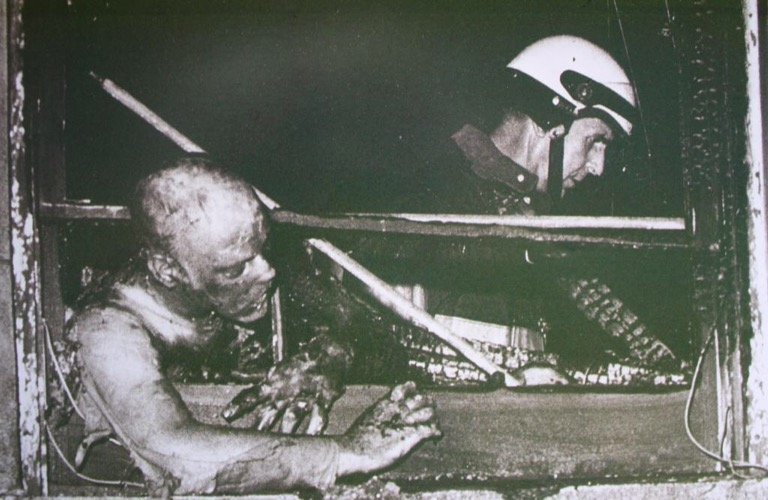
The UpStairs Lounge Maasacre 1973
The 24th of June in 1973 was a Sunday. For New Orleans’ gay community, it was the last day of national Pride Weekend, as well as the fourth anniversary of 1969’s Stonewall riots. You couldn’t really have an open celebration of those events — in ’73, anti-gay slurs, discrimination, and even violence were still as common as sin — but the revelers had few concerns. They had their own gathering spots in the sweltering city, places where people tended to leave them be, including a second-floor bar on the corner of Iberville and Chartres Street called the UpStairs Lounge.
That Sunday, dozens of members of the Metropolitan Community Church (MCC), the nation’s first gay church, founded in Los Angeles in 1969, got together there for drinks and conversation. However around 8PM an intruder had set fire to the stairwell outside the door and when one of the patrons opened the door a huge blaze erupted into the bar. Metal bars on the UpStairs Lounge windows, meant to keep people from falling out, were just 14 inches apart; while some managed to squeeze through and jump, others got stuck. Of the 65 patrons present at the time the ensuing fire claimed the lives of 32 members of the LGBTQ community. Until the Pulse Nightclub Massacre the 1973 Upstairs Lounge fire had set the record for the most gay lives lost.
PRIMARY REFERENCE
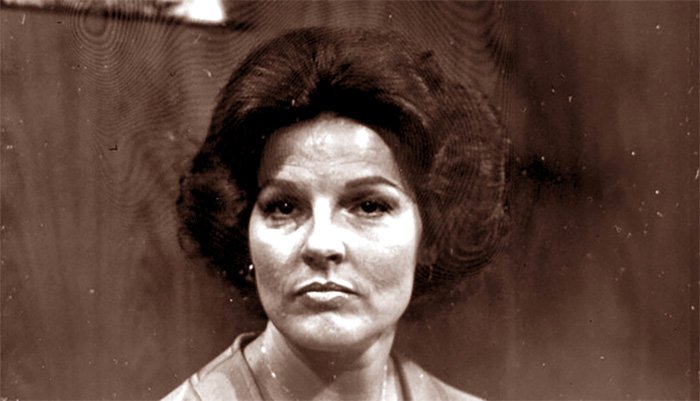
The War of the Orange Queen 1977
In 1977 Dade County, Florida passed an ordinance that prohibited discrimination based on sexual orientation. Soon after singer Anita Bryant, who was also the face of the orange juice industry led a very publicized campaign to repeal the ordinance as a leader of a coalition knows as “Save Or Children” (Not to be confused with a later non-profit group). The campaign was based on conservative Christian beliefs regarding the “sinfulness” of homosexuality and a perceivd threat that homosexual teachers were recruiting children to a homosexual lifestyle and possible child molestation. The campaign marked the beginning of an organized opposition to gay rights that spread across the nation.
On June 7, 1977, Bryant’s campaign led to a repeal of the anti-discrimination ordinance by a margin of 69 to 31 percent. However, the success of Bryant’s campaign galvanized her opponents, and the gay community retaliated against her by organizing a boycott of orange juice. Gay bars all over North America stopped serving screwdrivers and replaced them with the “Anita Bryant Cocktail”, which was made with vodka and apple juice. Sales and proceeds went to gay rights activists to help fund their fight against Bryant and her campaign. During this period Bryant was known to refer to Gay people as “human garbagee”.
PRIMARY REFERENCE
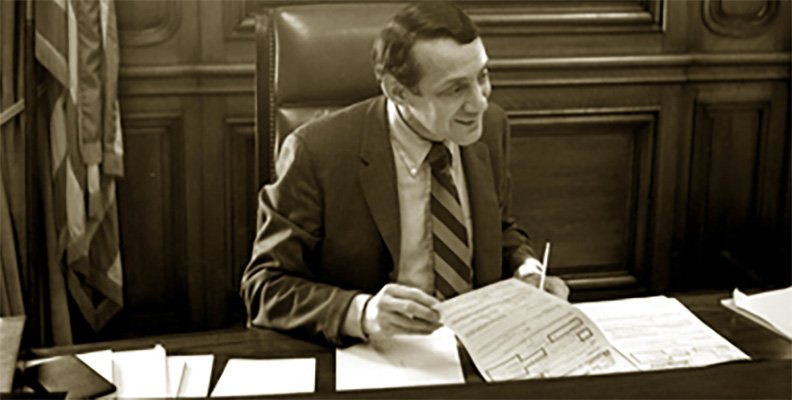
Harvey Milk 1978
Harvey Milk, was a visionary civil and human rights leader who became one of the first openly gay elected officials in the United States when he won a seat on the San Francisco Board of Supervisors in 1977. Milk’s unprecedented loud and unapologetic proclamation of his authenticity as an openly gay candidate for public office, and his subsequent election gave never before experienced hope to Lesbian, Gay, Bisexual, and Transgendered (LGBT) people everywhere at a time when the community was encountering widespread hostility and discrimination. His remarkable career was tragically cut short when he was assassinated nearly a year after taking office. On November 27, 1978, a disgruntled former city Supervisor assassinated Milk and Mayor George Moscone. Dan White sneaked into City Hall through a basement window, avoiding the metal detectors at the official entrances, went to Moscone’s office, killed him, then walked down the hall to kill Milk. That night, a crowd of thousands spontaneously came together on Castro Street and marched to City Hall in a silent candlelight vigil that has been recognized as one of the most eloquent responses to violence that a community has ever expressed.
In one of his most remembered speeches, Milk spoke of the American ideal of equality, proclaiming, “Gay people, we will not win our rights by staying quietly in our closets. … We are coming out to fight the lies, the myths, the distortions. We are coming out to tell the truths about gays, for I am tired of the conspiracy of silence, so I’m going to talk about it. And I want you to talk about it. You must come out.”
PRIMARY REFERENCE
AIDS 1982 - present day
The term AIDS, an acronym for Acquired Immune Defiency Syndrom, was first coined in September 1982 by the Center for Disease Control. Since that time millions of people globally have become infected and many still die from the infection, especially in under-developed areas of the world. It was during the previous year that the syndrome first raised it’s ugly head and was first noticed in the Gay communites of San Francisco and New York. The effects were soon to devastate the Gay community and the term “Gay Plague” came into vogue to describe it by many in the general populice. An initial warning sign was the aquisition of Pneumocystis carinii pneumonia (PCP), a rare lung infection. Soon after a rare, and unusually aggressive, cancer, Kaposi’s Sarcoma, was linked with the infection as well. It wasn’t long before a general state of panic set in, especially in major cities across the world. In April 1984 the cause of the infection; a blood carrying retrovirus HTLV-III was identified by Dr. Robert Gallo of the National Cancer Institute as a probable cause of infection. At the same time Professor Luc Montagnier, from the Pasteur Institute in France, released research findings that Lymphadenopathy Associated Virus (LAV) appeared to be the cause. After a joint press conference of these two opposing labs the shortened term of “HIV Positive” was soon used to identify anyone carrying the virus and a blood test to determine infection was soon developed.
In 1985 Ryan White, an Indiana teenager who had contracted the virus through a blood transfusion was identified and a whole new perspective on the infection began to evolve- you didn’t have to be Gay to acquire it. In October of that year actor Rock Hudson died from AIDS, raising an even higher level of awareness of the infection. In his will he left a quarter million dollars to set up the American Foundation for AIDS Research and longtime friend Elizabeth Taylor serves as the first national chairman. A phenomenal amount of global research ensued. However, it wasn’t until October, 1990 that the FDA approves the use of zidovudine (AZT) for pediatric AIDS. It’s widespread use as a medical treatment soon followed.
photo attribution: (public domain) NIAID
https://www.flickr.com/photos/niaid/27024515711
Secondary reference: http://healthland.time.com/2012/07/17/truvada-5-things-to-know-about-the-first-drug-to-prevent-hiv/
PRIMARY REFERENCE
Don't Ask, Don't Tell 1990s - 2010
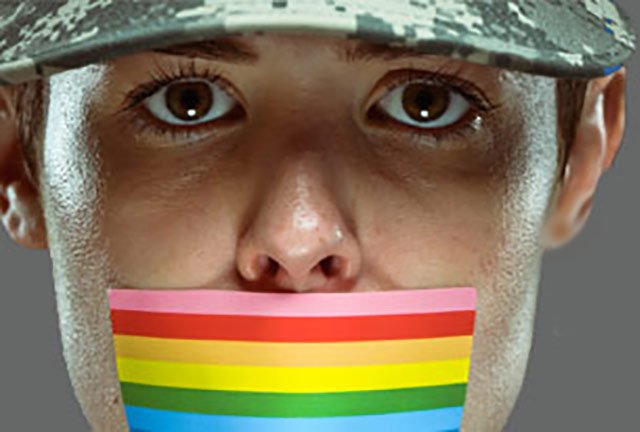
Even though many other developed countries, including Israel, Canada and Australia had allowed gays to serve openly in the military the official position on the subject in the U.S. was outlined by a policy adopted by President Clinton in the early 1990’s of “Don’t Ask, Don’t Tell”. This policy allowed for gay military personal to serve as long as they didn’t reveal their sexuality. Although this was a minor step itstill allowed for discharge of homosexual personal- at great expense to the taxpayer, as well as decreasing the pool of military enlistees who felt the policy discriminatory. During the subsequent 20 year period many parties were working to repeal the policy and allow gay servicemen and women to serve openly. After much debate and with a military study released November 30, 2010, which concluded that the repeal of the ban on gays would have a minimal negative impact on the military’s effectiveness, the door was open to policy change. Within a month both the House of Representatives and the U.S. Senate voted to repeal the old policy. Being one of his campaign promises President Barack Obama quickly facilitated signing the repeal into law on December 22, 2010. secondary resource: http://www.npr.org/2010/12/07/131857684/how-gay-soldiers-serve-openly-around-the-world
PRIMARY REFERENCE
Matthew Shepard 1998
On October 7, 1998, Matthew Shepard, a 21 year old college student at the University of Wisconsin at Laramie, asked for a ride home from a local bar. Two men, Aaron McKinney and Russell Henderson, lead him to a remote area east of Laramie where they demonstrated unimaginable acts of hate. Matthew was tied to a split-rail fence where he was beaten and left to die in the cold of the night. Over a day later he was found by a cyclist who initially mistook him for a scarecrow. Within 5 days he died from the injuries sustained during the attack. It is general consensus that this unspeakable act of cruelty was initiated when the two assailants determined he was indeed gay, after they claim ”he came on to them”. It was brought out later when reviewing trascripts of the trial that the two men were originally looking for methamphetamines or a way to purchase them by robbing the victim. Regardless of the reason the flash point of the encounter developed when they ulitmately determined Matthew was indeed a homosexual. Although both men were found guily and are currently serving life sentences the whole episode was noted as a hate crime by national media. Matthew’s parents eventually set up the Matthew Shepard Foundation to bring LGBT hate crimes to the forefront of national attention. (For more on LGBT hate crimes go to our Gay Life page)
PRIMARY REFERENCE
Same Sex Marriage 2015
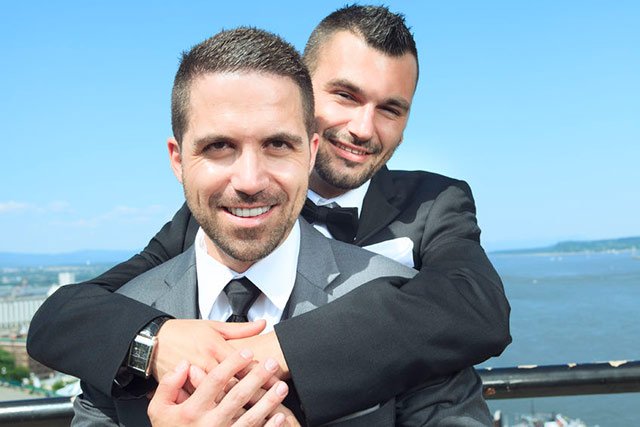
On Friday, June 26, 2015 marriage equality for same sex couples was assured by a divided U. S. Supreme Court. In the 5-4 ruling, Justice Anthony Kennedy wrote for the majority with the four liberal justices. Nearly 46 years to the day after a riot at New York’s Stonewall Inn ushered in the modern gay rights movement, the decision could settle one of the major civil rights fights of this era. The language of Kennedy’s opinion spoke eloquently of the most fundamental values of family, love and liberty.
This landmark ruling was the result of hearing a case that had been bounced around between regional circuit courts. In November 2014, following a lengthy series of appeals court rulings from the Fourth, Seventh, Ninth, and Tenth Circuits that state-level bans on same-sex marriage were unconstitutional, the Sixth Circuit ruled that it was bound by Baker v. Nelson and found them constitutional, creating a split between circuits and leading to an almost inevitable Supreme Court review.
Decided on June 26, 2015, Obergefell overturned Baker and requires all states to issue marriage licenses to same-sex couples and to recognize same-sex marriages validly performed in other jurisdictions.[4] This legalized same-sex marriage throughout the United States, and its possessions and territories. The Court examined the nature of fundamental rights guaranteed to all by the Constitution, the harm done to individuals by delaying the implementation of such rights while the democratic process plays out, and the evolving understanding of discrimination and inequality that has developed greatly since Baker.
See a separate timeline of same sex marriage development
PRIMARY REFERENCE
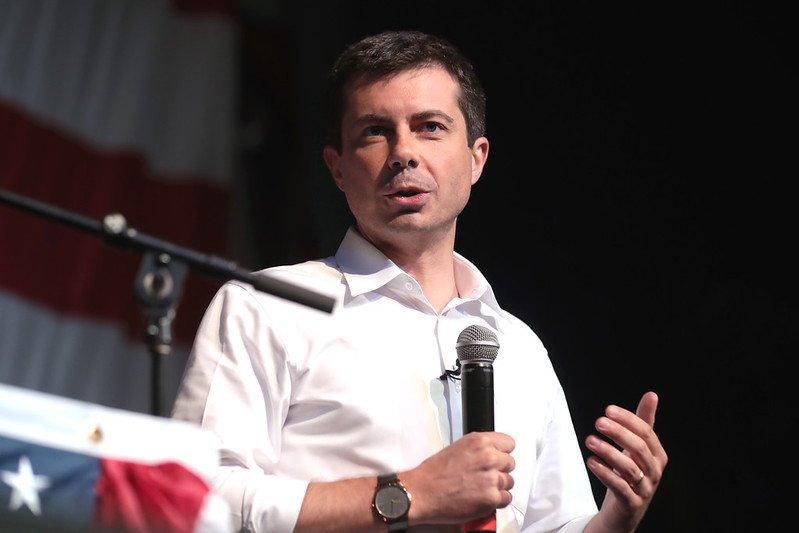
Mayor Pete 2020
Pete Buttegieg was born in 1982, at the beginning of the AIDS crisis. Born to a Maltese Father and a Califonian mother. Buttigieg was valedictorian of the class of 2000 at St. Joseph High School in South Bend. That year, he won first prize in the John F. Kennedy Presidential Library and Museum‘s Profiles in Courage essay contest. He traveled to Boston to accept the award and met Caroline Kennedy and other members of President Kennedy’s family. The subject of his winning essay was the integrity and political courage of then U.S. representative Bernie Sanders of Vermont, one of only two independent politicians in Congress. In 2000, Buttigieg was also chosen as one of two student delegates from Indiana to the United States Senate Youth Program, an annual scholarship competition sponsored jointly by the U.S. Senate and the Hearst Foundations. These projects most certainly help formulate aspirations in U.S. politics.
In 2004 he graduated with honors from Harvard University and went on to be awarded a Rhodes Scholrship. He then went on to Oxford University. At Oxford, he was an editor of the Oxford International Review, and was a co-founder and member of the Democratic Renaissance Project, an informal debate and discussion group of about a dozen Oxford students. Along the way he also learned six languages fluently. Also in 2004 he found ime to work on John Kerry’s presidential campaign.
In 2007 Buttigieg became a consultant at the Chicago office of McKinsey & Company, where he worked on energy, retail, economic development, and logistics for three years. In 2009 he joined the U.S Naval Reserve and soon advanced to Naval Intelligence. As a resrve officer he still had time to begin to pursue political ambitions and after attemps at differet politcal office in Indiana was eleced Mayor of South Bend in January of 2012 at the age of 29. His stint as mayor had it’s high and low points. Racial issues developed when he fired a black police chief who was accused of illegal wire tapping. However he made great strides in urban development and addressing urban blight. In 2014 he took a seven month break from mayoral duties for a stint in afghanastan as an intelligence officer and an armed driver for his commanding officer.
In 2015 he came out as a Gay man but soon after was re-elected South Bend mayor for a second term. In December 2017, Buttigieg announced his engagement to Chasten Glezman, a junior high school teacher. They had been dating since August 2015 after meeting on the dating app Hinge.
On January 23, 2019, Buttigieg announced that he was forming an exploratory committee to run for President of the United States in the upcoming 2020 election. When his run became official hardly anyone has heard his name outside of Indiana. That all changed quicly with a gress roots committee that grew into an election powerhouse throughout 2019. That June,, to mark the 50th anniversary of the Stonewall riots, a watershed moment in the LGBTQ rights movement, Queerty named him one of its “Pride50” people identified as “trailblazing individuals who actively ensure society remains moving towards equality, acceptance and dignity for all queer people”.
With his husband Chasten by his side Mayor Pete broke new ground as the first out Gay man to run for President of the United States. Kissing his husband on stage during campaign appearances become somewhat controversial in conservative circles. Howver it didn’t prevent him in winning the Iowa Primary and coming in second behind Senator Bernie Sanders in New Hampshire. After the South Carolina primary he realized that his old racial issues as mayor was coming back to haunt him. Without a larger percentage of the black vote the writing was on the wall and he dopped out of the race and immediately threw his support to Joe Biden.
Whatever the future holds for Mayor Pete you can be sure he holds a high place in LGBTQ history.
PRIMARY REFERENCE
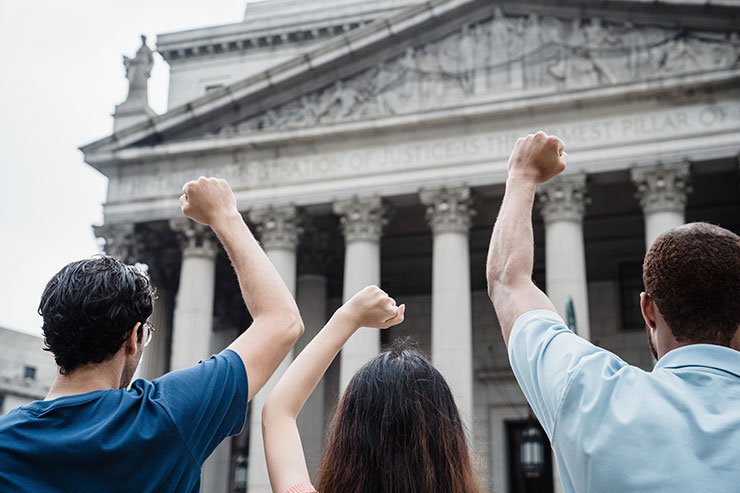
Supreme Court: 2020
1964 Anti-Discrimination Law Includes LGBTQ
June 2020: Cheif Justice Gorsuch went rogue on the president who appointed him. Trump and his evangelicals and voted that, according to the writing of the 1964 rights law, that employers can no longer discriminate against or fire a Gay or Transgender individual simply for being who they are. Gorsuch was also joined by Chief Justice John Roberts, and the four court liberals Justices Ruth Bader Ginsburg, Elena Kagan, Sonia Sotomayor and Stephen Breyer, who all wree appointed by Democratic presidents. The liberals chose not to write concurring opinions, allowing Gorsuch’s ringing endorsement of LGBTQ rights and sound rejection of Trump administration arguments, to stand alone. Obviously right wingers are in meltdown mode over this decision.